
Radon Mitigation Sioux Falls SD
Residential & Commercial Radon Systems, Testing and Fan Replacement
Sub-Slab Systems | Crawl Spaces | Sump Sealing | Fan Swaps
If your post-install test does not come back under 4.0 pCi/L, we rework the system at no charge until it does. That sentence is printed on the invoice, not just on the website.
Free quote, no obligation
You hear back from a person, not an autoresponder, within one business day. Call before 3pm on a weekday and it is usually the same afternoon.
What Sioux Falls homeowners say

Closing was in nine days and our test came back at 11. Dale had Marcus out the next morning and the whole thing was done and retested before the walkthrough. It cost $1,450, which was less than the two other bids we had.

Guys were late by about forty minutes on install day, which annoyed me because I took the morning off work. Trevor called ahead to say so, knocked fifty bucks off, and the system has held at 1.9 for two years now. I would still use them.

Our fan died sometime over the winter and we had no idea until somebody pointed out the gauge. Replaced same week.
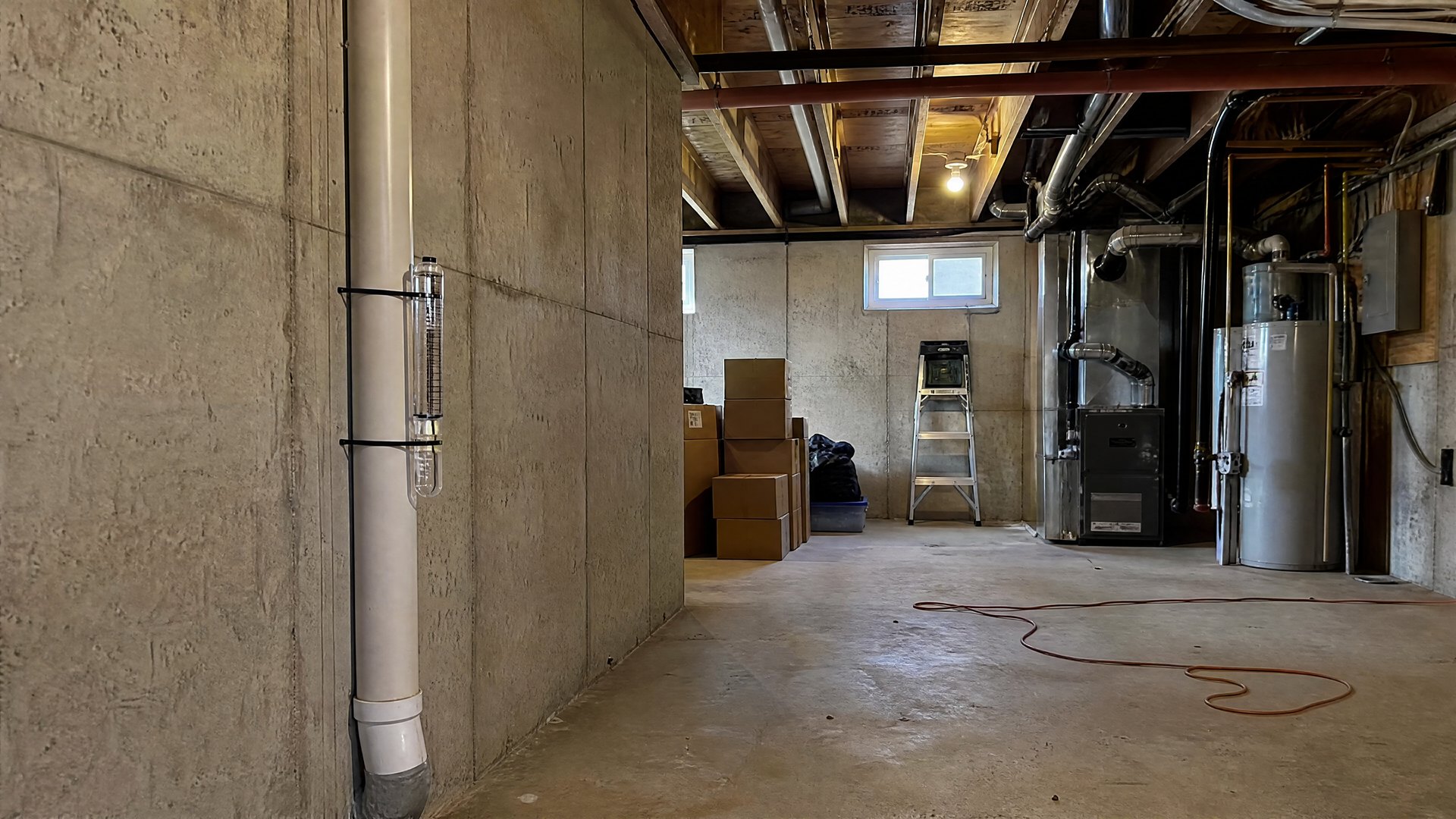
Radon mitigation in Sioux Falls means one thing in practice: getting the soil gas out from under your foundation before it gets into the air your family breathes. Most homes here need a sub-slab depressurization system, which is a suction point cut through the basement floor, a sealed pipe run, and a fan that vents above the roofline. Installed properly it takes a working day, runs on about three dollars of electricity a month, and drops a 12 pCi/L basement into the ones and twos.
Dale started this company in 2014 after a decade of pulling test kits out of houses on the south side and watching people get quoted wildly different numbers for the same job. Today Marcus and Trevor run the installs out of the white Silverado with the pipe rack. We handle radon testing, mitigation system installation, crawl space membranes, sump crock sealing, radon fan replacement, finished basement routing, new construction rough-ins, commercial buildings, and radon in well water for acreages outside town.
What an unmitigated Sioux Falls basement is actually costing you
- Minnehaha County averages 6.5 pCi/LAcross 1,920 reported tests, per the American Lung Association. The national indoor average is 1.3.
- A closing that stalls at the eleventh hourSouth Dakota law makes sellers disclose known radon levels. A bad number found during inspection becomes a price negotiation you did not plan for.
- Anyone can call themselves a radon contractor hereSouth Dakota requires no license and no certification to install a mitigation system. Not one.
- Passive stacks that were never finishedBuilders in the Harrisburg and Tea corridor rough in the pipe and stop. Without a fan on it, that stack is doing very little.
- Exterior systems that freeze in JanuaryCondensation ices up in an uninsulated outdoor pipe run. The homeowner finds out in spring when they finally check the gauge.
- Lung cancer, which is the slow oneRadon is the second leading cause in the United States and the leading cause among people who never smoked.
3 Reasons Sioux Falls Homeowners Trust Our Radon Contractors
The number in writing, not the promise in the sales pitch
Every install ends with a post-mitigation test. If the result is not under 4.0 pCi/L, we come back and rework the system at no charge until it is. That sentence is printed on your invoice.
Certification you can go verify yourself, right now
South Dakota does not license radon contractors, so the badge on a website means nothing on its own. Look us up in the National Radon Proficiency Program directory at nrpp.info before you call anybody, including us. If a contractor is not in there, ask why.
Systems built for South Dakota winters
Interior routing wherever the house allows it, insulated pipe where it cannot, and fan sizing based on an actual suction test rather than a guess. We keep getting called out to fix exterior systems that iced up in a January cold snap, and we would rather not add to that pile.
Got a test result over 4.0? Let us look at the house.
Call (605) 210-7667 Get a free quote
5-Star Rated · Insured & NRPP Certified · Under 4.0 pCi/L Guaranteed
Every radon service we offer in Sioux Falls
Radon Mitigation System Installation in Sioux Falls
Test came back over 4.0 pCi/L? A sub-slab depressurization system pulls the gas out from under your foundation and vents it above the roofline, usually in one working day.
Sub-slab depressurization systems installed in a day, tested after, guaranteed under 4.0 pCi/L.
Radon Testing and Inspection in Sioux Falls
Never tested, or testing for a closing deadline? Continuous monitors give you an hour-by-hour record in 48 hours, with a signed report a title company will accept.
Short-term and long-term testing, plus post-mitigation verification tests with lab documentation.
Radon Fan Replacement and System Repair in Sioux Falls
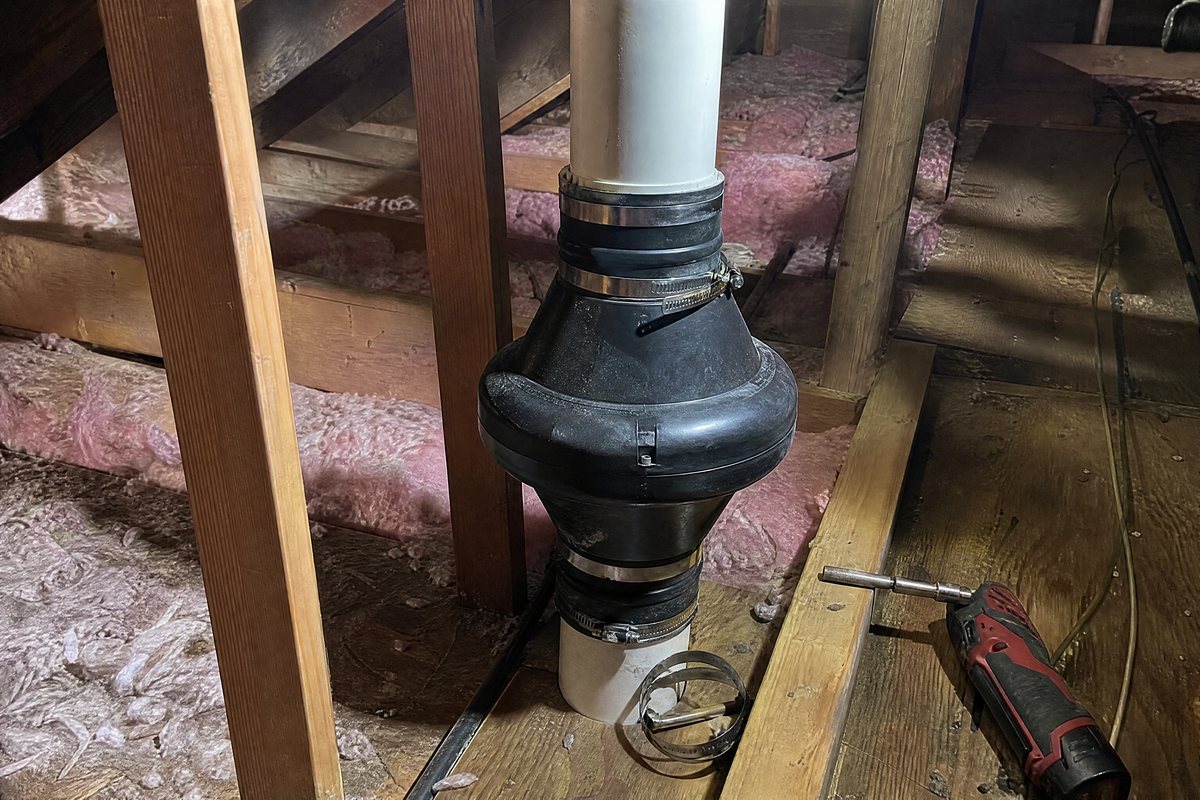
Manometer liquid gone level? Fan silent? That system stopped working, possibly months ago. Fan swaps run about an hour and we retest afterward.
Dead fan, dropped manometer, howling pipe, or a system somebody else installed wrong.
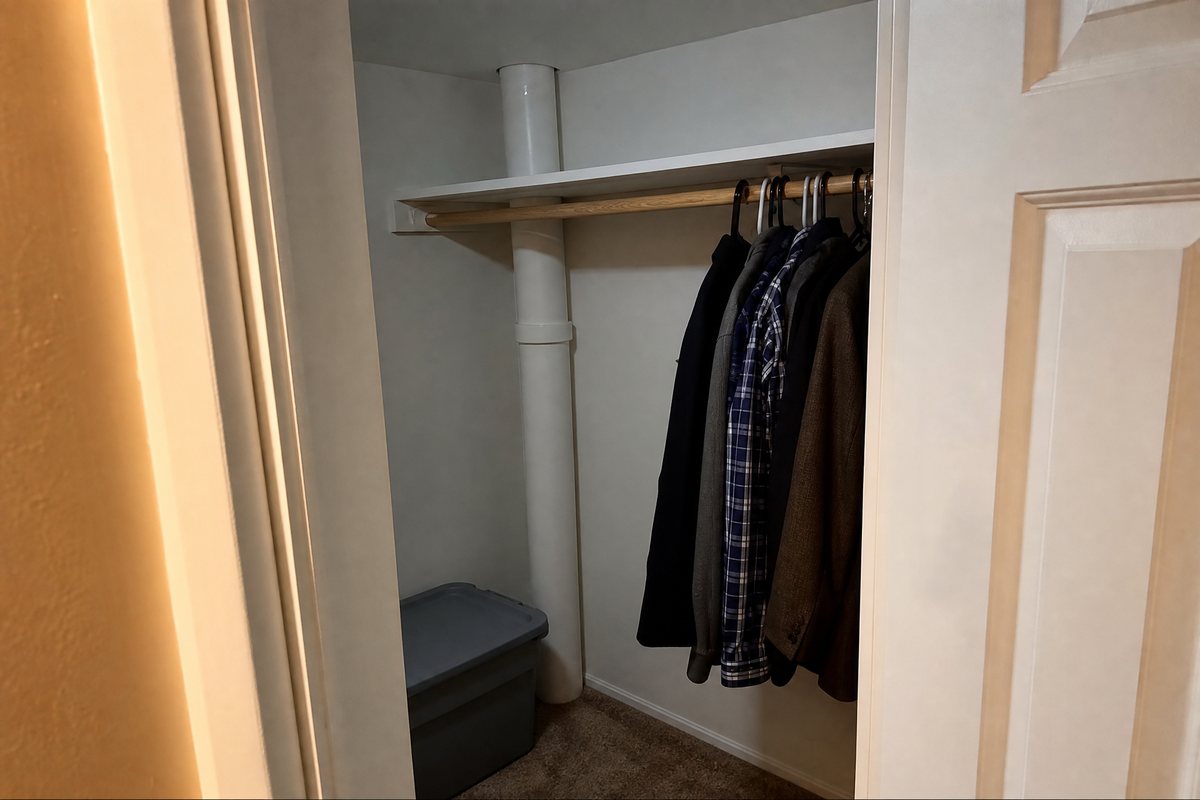
Finished Basement Radon Mitigation in Sioux Falls
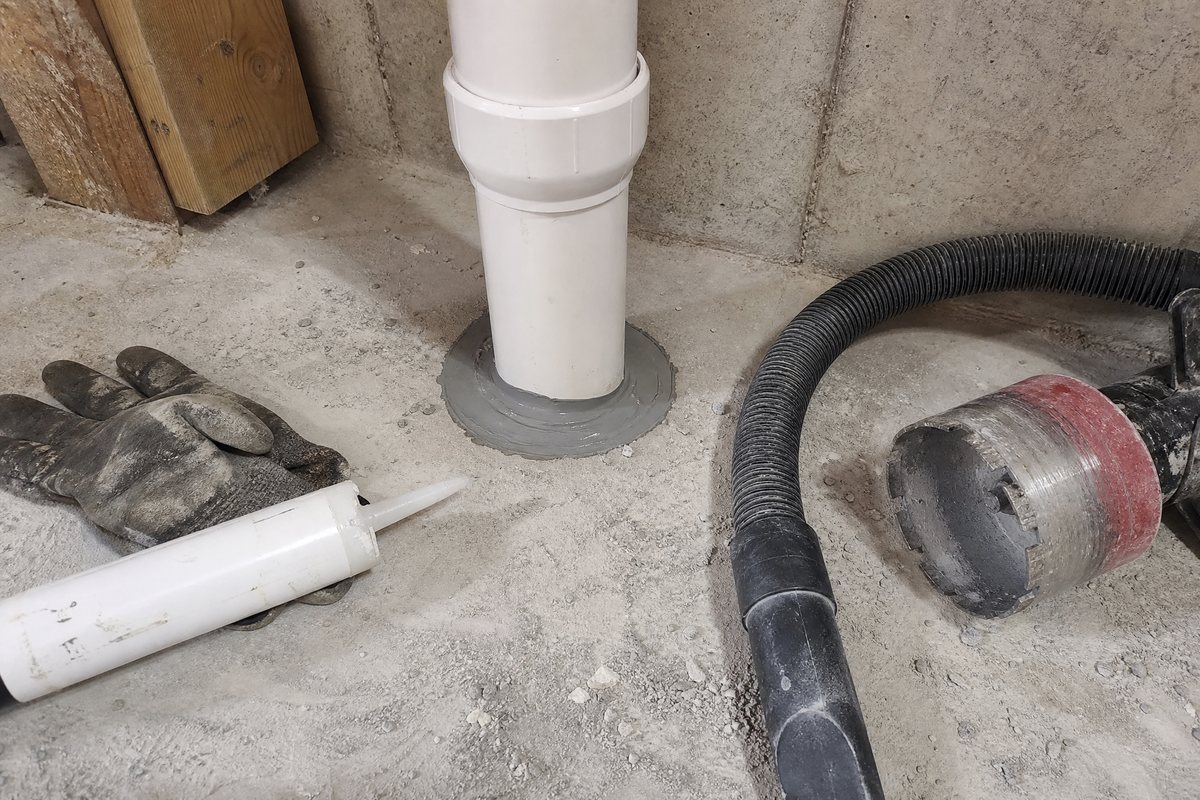
Worried a system means ripping open your finished basement? Most finished basements get routed through a closet, a mechanical chase, or the garage, with one small core hole and a patch.
Routing a system through a finished lower level without tearing out drywall you paid for.
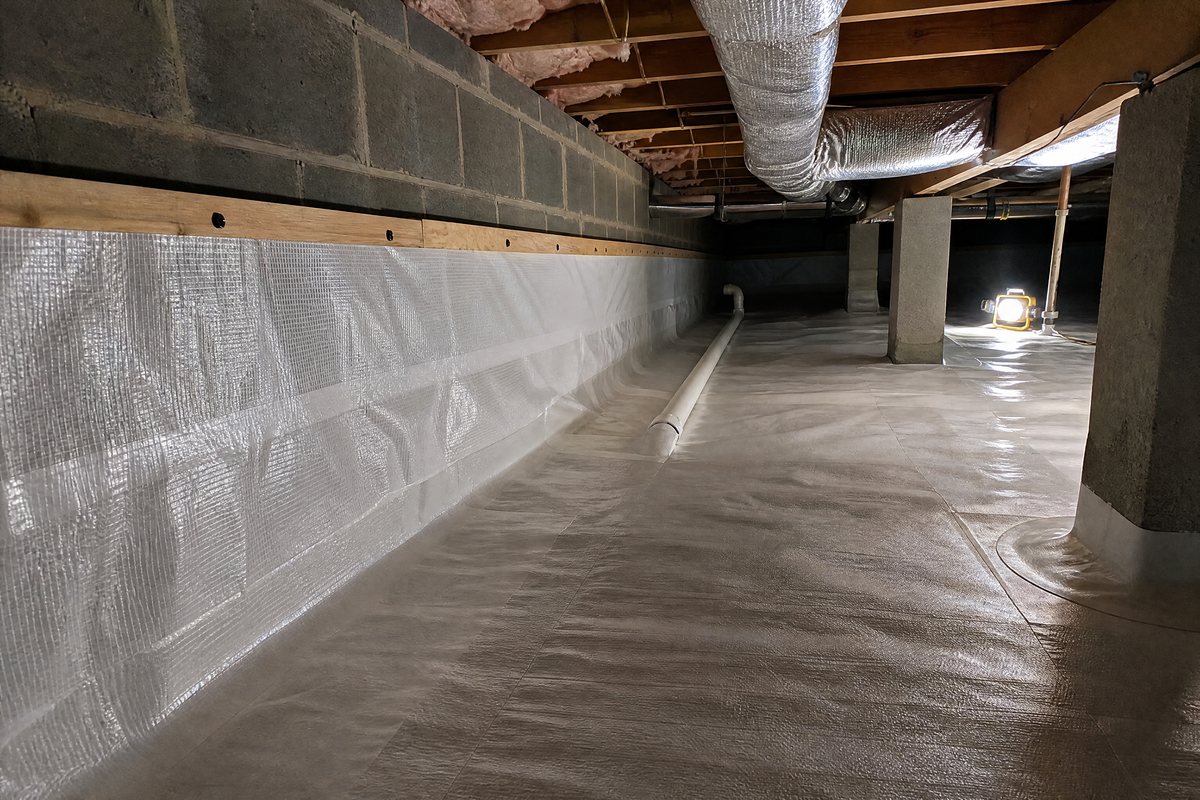
Crawl Space Radon Mitigation in Sioux Falls
Dirt-floor crawl space under part of the house? Bare soil is an open door for radon. A sealed membrane plus a sub-membrane suction point closes it.
Sealed vapor barrier over exposed soil, then sub-membrane depressurization.
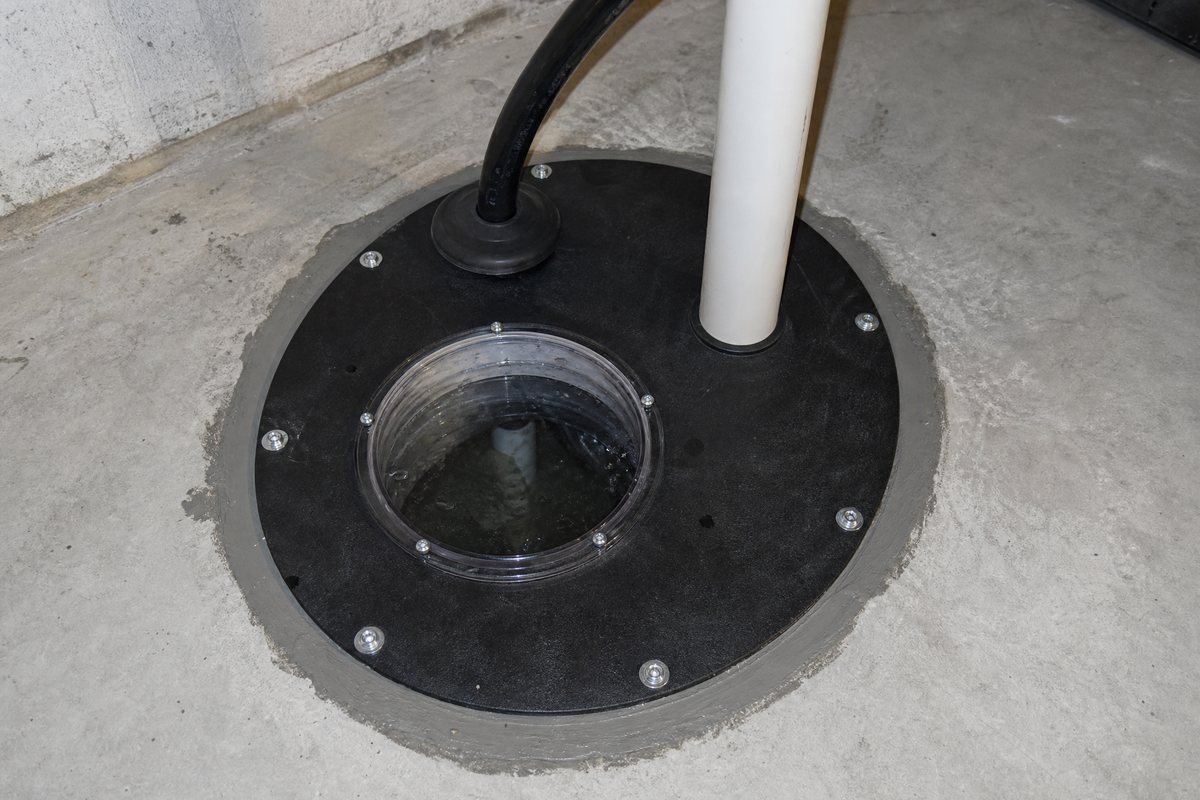
Sump Pump Sealing and Radon Systems in Sioux Falls
Open sump crock in the basement corner? An open crock vents soil gas straight into the house. Sealing it with a gasketed lid often becomes the suction point for the whole system.
Airtight sump lids with a viewing port and float access, tied into the radon system.
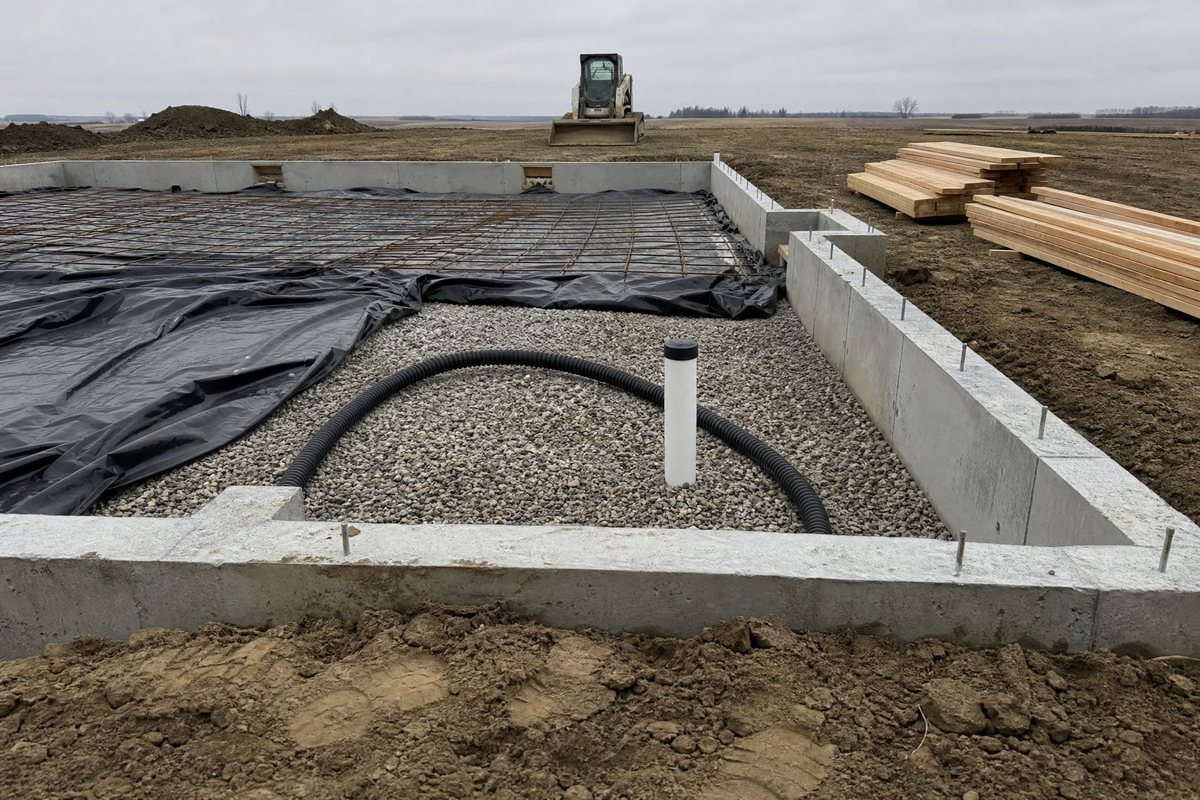
New Construction and Passive System Activation in Sioux Falls
White pipe running up through the house that does nothing? That is a passive stack. Adding a fan and a manometer turns it into a working system for a fraction of a full install.
Pre-slab rough-ins for builders, and activating passive stacks that were never finished.
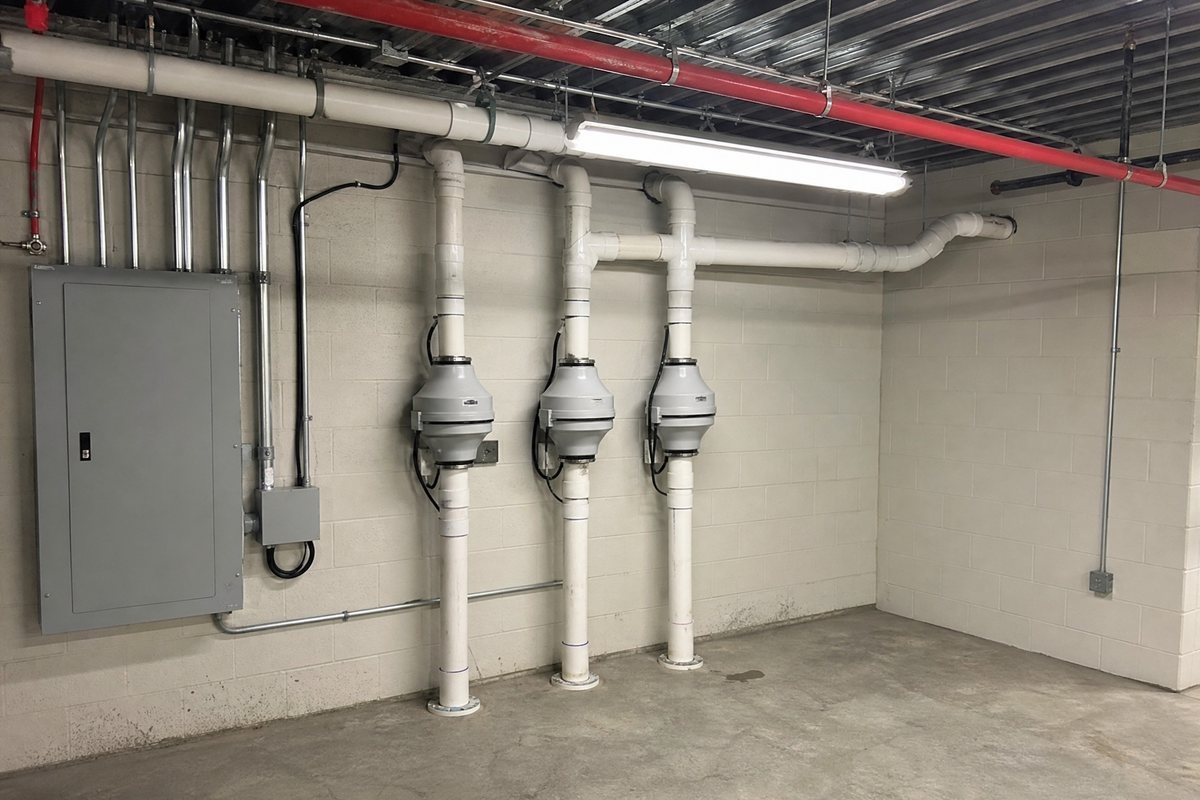
Commercial Radon Mitigation in Sioux Falls
Licensing body or insurer asking for radon documentation? Multi-zone measurement, an ANSI/AARST-compliant design, and a report package your file can actually use.
Schools, daycares, clinics, offices, and multifamily buildings, with documentation for compliance files.
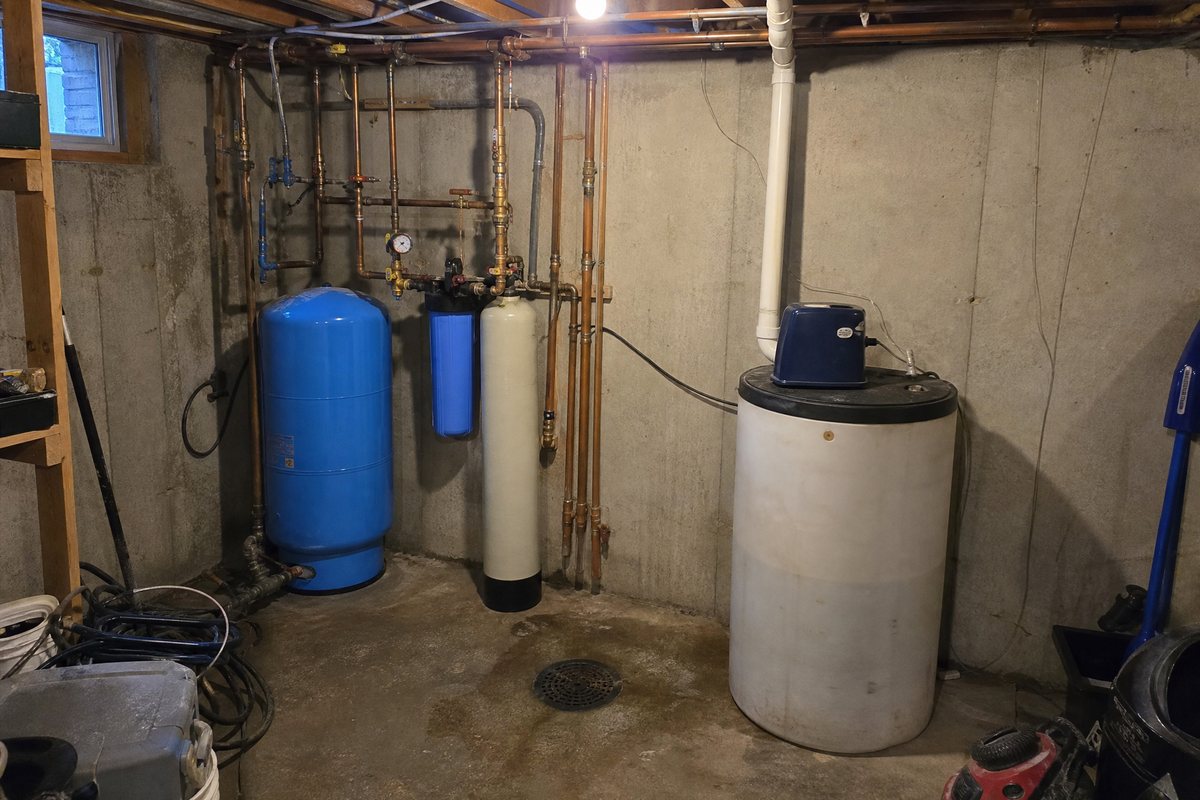
Radon in Well Water Treatment in Sioux Falls
On a private well outside city water? Radon dissolved in well water releases into the air every time somebody showers. Air testing alone will not find the source.
Aeration and GAC systems for acreages and rural homes on private wells.
Where we work
Our service areas include Brandon, Harrisburg, Tea, Hartford, Crooks, Baltic, Dell Rapids, Lennox, Canton, Vermillion, Brookings, Madison, Yankton, Mitchell, Watertown, Colton, Garretson, Humboldt, Renner, Rowena, Valley Springs, Worthing, Chancellor, Parker, Beresford and many more. If your town is not listed, call and ask. Regional trips get grouped, so the drive is often free.
Call now or send the form for a free, no-obligation estimate.
Call (605) 210-7667 Get a free quote
5-Star Rated · Insured & NRPP Certified · Under 4.0 pCi/L Guaranteed
How It Works
- 1
Call or send the form
Tell us your test number if you have one, your foundation type, and whether the basement is finished. That is usually enough to quote a range over the phone. You hear back from a person, not an autoresponder, within one business day, and if you call before 3pm on a weekday it is usually the same afternoon.
- 2
We look at the house and write it down
The visit takes about twenty minutes. Marcus checks the slab, the sump, the drain tile, and where a pipe can realistically run. The quote comes back itemized: fan model, pipe route, sealing work, post-test. No vague line items, and no pressure to sign anything while somebody is standing in your basement.
- 3
Install day, then the test
Most single-family installs are done between eight and four, with a shop vac running the whole time so the concrete dust stays in the basement instead of the ductwork. We set the manometer, walk you through what the reading should look like, and leave a test kit in place. Results come back in a few days.
Before and After: A 1978 Split-Level off Southeastern Ave
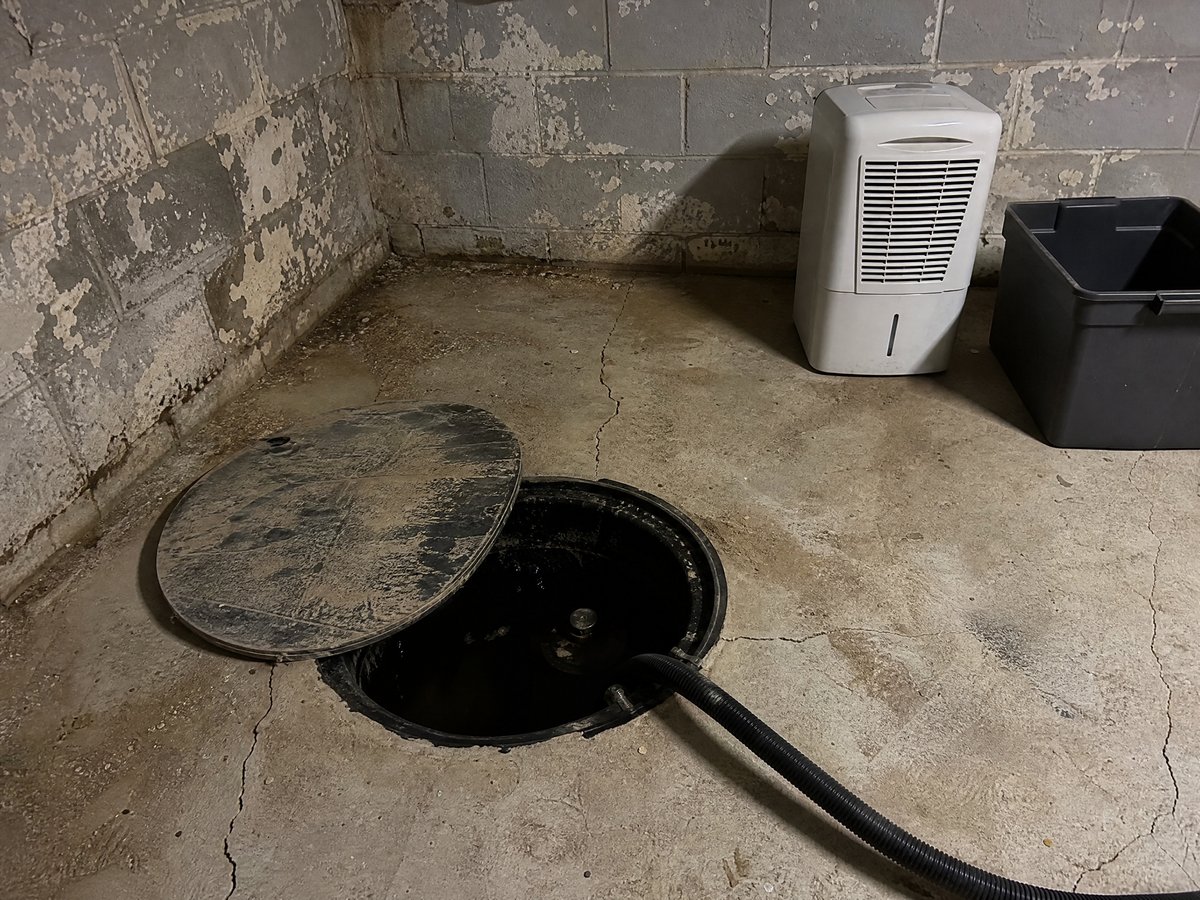
Before
Buyers had an inspection test come back at 14.2 pCi/L. The seller had already turned down two other bids and the closing was eleven days out.
- Open sump crock in the northwest corner, no lid at all, venting soil gas straight into the rec room
- Two floor cracks and a cold joint along the north wall, none of them sealed
- Finished ceiling in the rec room, so the obvious pipe route through the mechanical room was blocked
- Buyer financing contingent on documentation, with no time for a long-term test
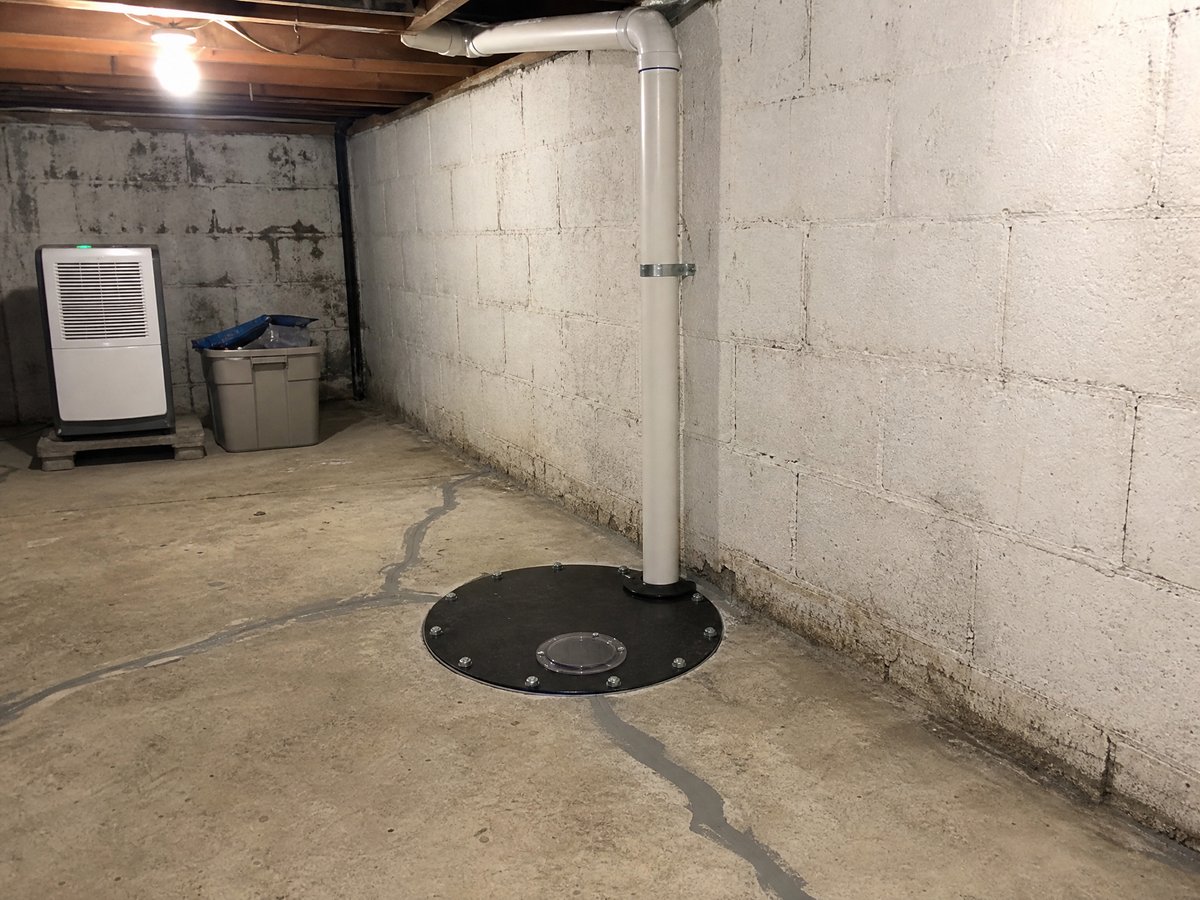
After
Sealed sump lid became the suction point, so no coring was needed. Pipe ran up through the utility closet, through the garage attic, and out the back slope of the roof.
- Gasketed lid with a clear viewing port and a serviceable float access hatch
- Cracks and the cold joint routed and filled with polyurethane before the fan went on
- RP145 in the garage attic, so nothing is visible from the street and nothing freezes
- 48-hour continuous monitor came back at 1.6 pCi/L, documentation to the title company the next morning
Radon questions Sioux Falls homeowners actually ask
Why is radon so bad in South Dakota specifically?
South Dakota has the highest average indoor radon reading in the country at 9.8 pCi/L, roughly seven times the national indoor average of 1.3. The reason is geology plus construction habits. Glacial till over Sioux Quartzite bedrock across eastern South Dakota holds uranium-bearing material, and the entire eastern half of the state sits in EPA Radon Zone 1, the highest-potential category. Add tightly built, heavily insulated homes with deep basements and long heating seasons, and you get a stack effect that pulls soil gas up through every crack in the slab for eight months a year. About 60 percent of tested South Dakota homes come back elevated, which is also the highest rate in the nation.
What does radon mitigation cost in Sioux Falls?
Most single-family systems in the Sioux Falls area land between $1,100 and $1,900, and the South Dakota Department of Agriculture and Natural Resources puts the statewide average installation at $1,200. Price moves with foundation type and pipe route, not with how alarming your test number was. A walkout with an accessible mechanical room and a sealable sump is at the low end. A 1920s house near McKennan Park with a block foundation, a partial crawl space, and a finished lower level is at the high end because the labor is genuinely harder. Anyone quoting you a flat number over the phone without asking about your foundation is guessing.
Does a radon system hurt resale value in Sioux Falls?
It helps, and the local market has largely settled this. South Dakota requires sellers to disclose known radon levels, so an untested house creates uncertainty a buyer has to price in, while a mitigated house with a recent post-install test result removes the question entirely. Real estate agents around Sioux Falls now routinely advise testing before listing rather than discovering a number during the inspection period. A visible white pipe is a smaller objection than a stalled closing.
How do I check a radon contractor when South Dakota does not license them?
Search the contractor's name in the National Radon Proficiency Program directory at nrpp.info, or the National Radon Safety Board listing, because South Dakota has no state licensing or certification requirement for radon work at all. The state's own DANR radon page points residents to those two national directories for exactly this reason. Beyond certification, ask three things: what fan model and why, whether the post-mitigation test is included, and whether the under-4.0 guarantee is written on the invoice or just said out loud. Answers to those three separate the real installers from the guys with a hole saw.
Do I even need a system, or can I just open windows?
Ventilation lowers radon while the windows are open and it goes right back up when you close them, which in Sioux Falls is most of the year. Natural ventilation is a stopgap during a real estate hold period, not a fix. An active sub-slab system reverses the pressure difference under the slab permanently and runs for about three dollars a month in electricity according to DANR, which is less than what you would spend heating a house with the windows cracked in February.
How long does the install take and how disruptive is it?
A typical Sioux Falls install runs eight to four in a single day. The loudest part is the core drill, which is about fifteen minutes, and we run a shop vac at the bit the entire time so the silica dust stays local instead of migrating through the return air. You do not need to be home for all of it. Finished basements take longer because the pipe route has to be planned rather than obvious, and occasionally a second short visit is needed for drywall patching.
Working out a budget? We published what radon mitigation really costs in Sioux Falls, built from South Dakota DANR figures and local quote ranges.
Straight answer, itemized quote, no salesman at your door.
Call (605) 210-7667 Get a free quote
5-Star Rated · Insured & NRPP Certified · Under 4.0 pCi/L Guaranteed
Frequently asked questions
How much does a radon mitigation system cost in Sioux Falls?
Most homes run $1,100 to $1,900 installed. South Dakota DANR lists the statewide average at $1,200. Foundation type drives the number more than anything else, so a walkout in Brandon with an accessible sump usually comes in lower than a 1930s house with a partial crawl space.
Is my radon system supposed to make noise?
A little. You should hear a soft airflow hiss near the fan and nothing else. Loud whistling usually means undersized pipe. Gurgling means the pipe was not sloped correctly and water is pooling in a low spot. A rattling or grinding fan is a bearing going out and it is going to quit within a few months. All three are fixable, and honestly most of the repair calls we take on radon fan replacement in Harrisburg and around the south side start with somebody saying the noise finally got annoying enough to deal with.
How often should I retest after mitigation?
Every two years, and any time the fan is replaced or the house has major foundation or HVAC work done. The state gives away 500 free radon test kits a year through DANR, so a retest costs you postage.
My builder put in a passive system. Is that enough?
Usually not on its own. A passive stack relies on warm air rising in the pipe, which moves some gas but rarely enough to bring a South Dakota house under 4.0. The good news is that activating one is the cheapest job we do, because the pipe already exists. Adding a fan and a manometer to a passive system in Tea typically runs a few hundred dollars rather than the cost of a full install. If your house was built after roughly 2010 and you see a white PVC pipe running from the basement up through the roof with no fan on it, that is what you have.
Do you have to drill through my finished basement floor?
Not always. If your sump crock is in a usable spot, sealing it with a gasketed lid gives us the suction point without touching the floor. When coring is unavoidable in a finished space, the hole is about five inches, it goes in a closet or behind mechanicals wherever the physics allow, and it gets patched. We have run more than a few systems for finished basement radon mitigation in Brandon straight up through a coat closet, and the visible result is a pipe you have to go looking for.
Will one system cover the whole house if I have an addition?
Sometimes, sometimes not, and the honest answer is that a diagnostic suction test tells us and a sales brochure does not. Additions frequently sit on their own slab with a footing wall between them and the original foundation, and suction does not cross that footing. What we do is drill a small test hole in the addition, run the vacuum, and measure whether the pressure field extends. If it does, one system. If it does not, the addition needs its own suction point tied into the same fan, which adds pipe but rarely a second fan. This comes up a lot on the older houses around Whittier and All Saints where a back porch got enclosed sometime in the eighties and nobody documented what was poured underneath it.